History
From Chutia forts and Ahom temples to steamer ports, tea gardens and the Quit India movement.
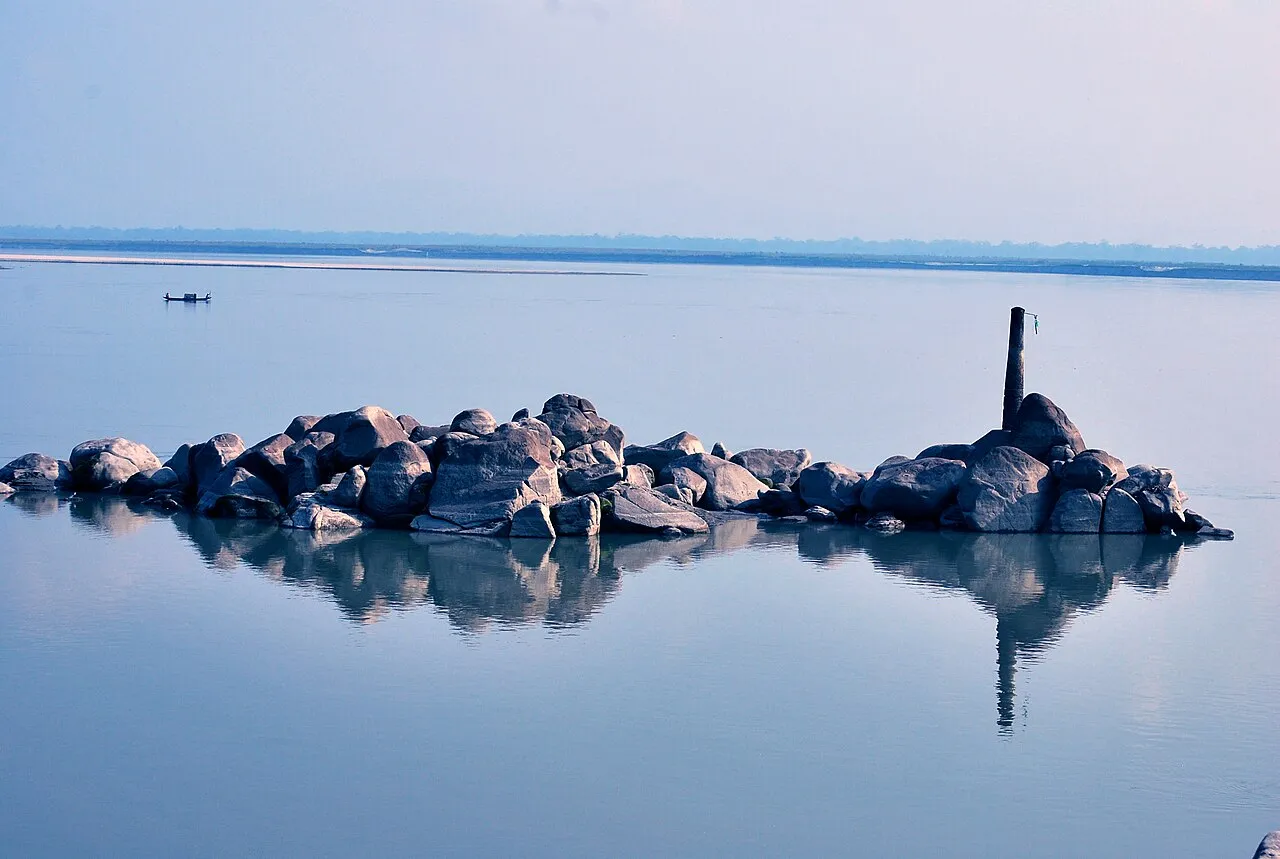
Gupta Kashi
Biswanath takes its name from the Shiva temple at Biswanath Ghat, a place long known as Gupta Kashi. The official explanation is that the name compares it with Kashi in the golden age of the Guptas. Ruins, stone posts and beams at the confluence suggest that a stone temple stood there long ago.
Chutia and Bhuyan rule
Most of what is now the district was part of the Chutia kingdom until the Ahoms annexed it in the early 16th century. The western part was held by independent Bhuyan chieftains.
The Chutias built forts here, including Buroi near the Nyishi hills and Pratapgarh. Sources disagree on which king built Pratapgarh. A stone inscription on Umatumoni island records the coronation of a king identified with the Chutia ruler Lakshminarayan.
The Ahom period
Ahom influence reached this part of the north bank in the late 15th century: according to the district portal, the Ahom king Su-sen-pha repaired the Nagsankar temple at Sootea in 1480. The Ahoms took over the Chutia lands in the early 16th century.
Under British rule the area became part of Darrang district (from 1835), and later of Sonitpur district when it was split from Darrang in 1983.
Steamers, timber houses and tea
Biswanathghat built country boats long before steam. After Guwahati–Dibrugarh steamer services began in 1861, it became one of the river ports between Dhubri and Dibrugarh. Tea from the north-bank gardens left from here, and workers and traders arrived.
The tea gardens brought the ancestors of today’s tea-garden community, mostly from Chota Nagpur, the Santal Parganas, Odisha and central India, mainly from the 1860s onward.
Merchant families settled too. The Sentinel tells the story of the Agarwala family, who came from Rajasthan around 1880. Their timber houses of 1918 and 1933 still stand at the ghat.
1942: Gohpur
The district’s best-known moment in the freedom struggle happened at Gohpur, now a sub-division of Biswanath district. On 20 September 1942, during the Quit India movement, 17-year-old Kanaklata Barua led an unarmed procession to hoist the national flag at Gohpur police station. She was shot dead. Mukunda Kakati took up the flag and was also killed. Bronze statues of both stand at the spot today.
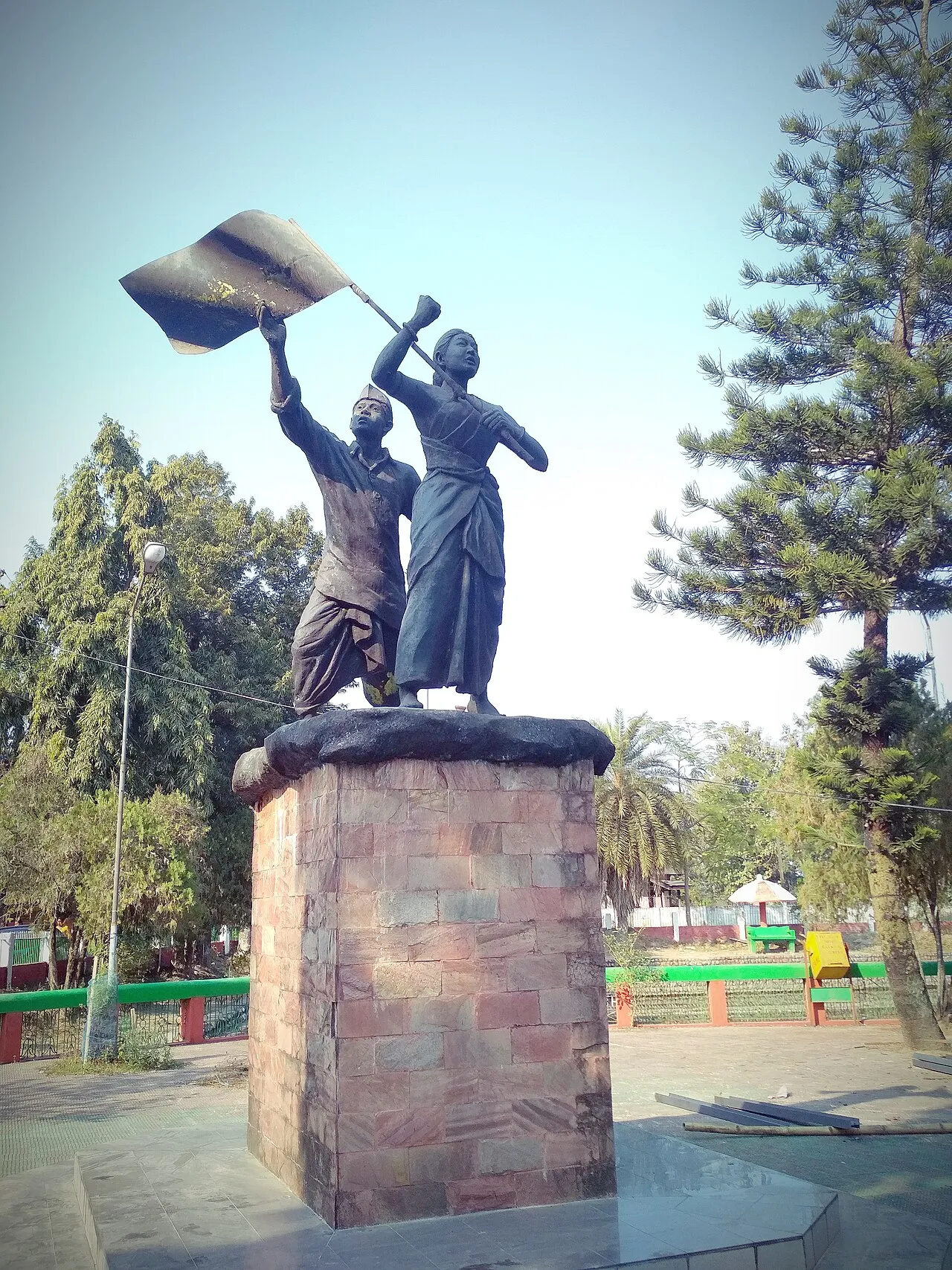 Statues of Kanaklata Barua and Mukunda Kakati at Gohpur police station. Photo: Pranabnlp, CC BY-SA 4.0

A new district
Biswanath district was announced on 15 August 2015 and formally created in February 2016. It was merged back into Sonitpur at the end of 2022 and restored in 2023 (cabinet decision in August, notified in September).
History here is drawn from published sources, and some details are still debated. If you know a local historian, a book or an archive that can add to this page, please get in touch.