Culture & festivals
Biswanath is home to Assamese, tea-garden and Adivasi, Mising, Bodo, Nepali, Bengali, Odia, Karbi and other communities. Each one brings its own calendar of celebrations.
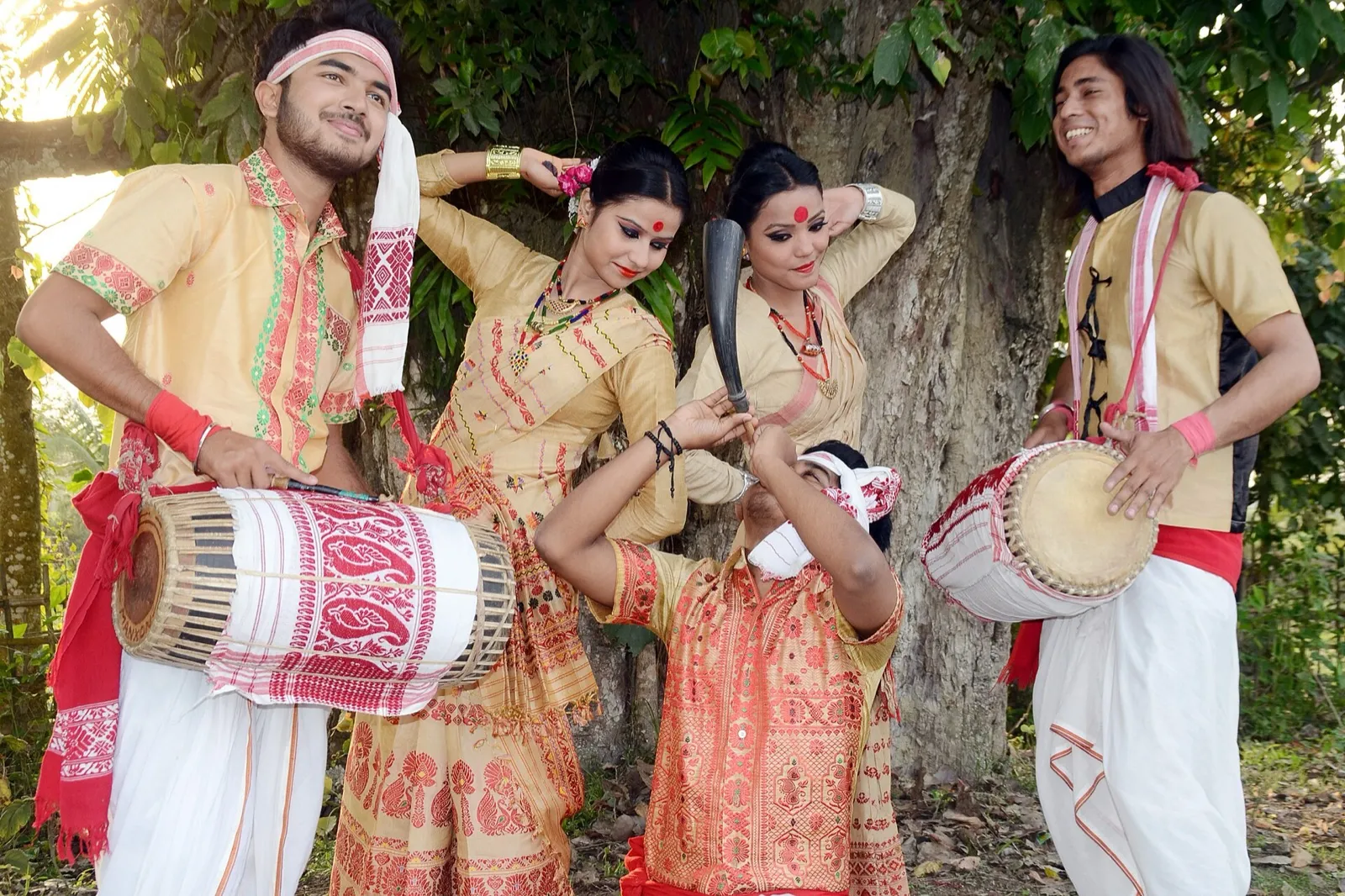

Magh Bihu (Bhogali Bihu)
The harvest festival, a time for feasting. On Uruka night people gather around a temporary hut and build a meji (bonfire), then burn it the next morning. It is celebrated in tea gardens such as Monabarie as well as in town.
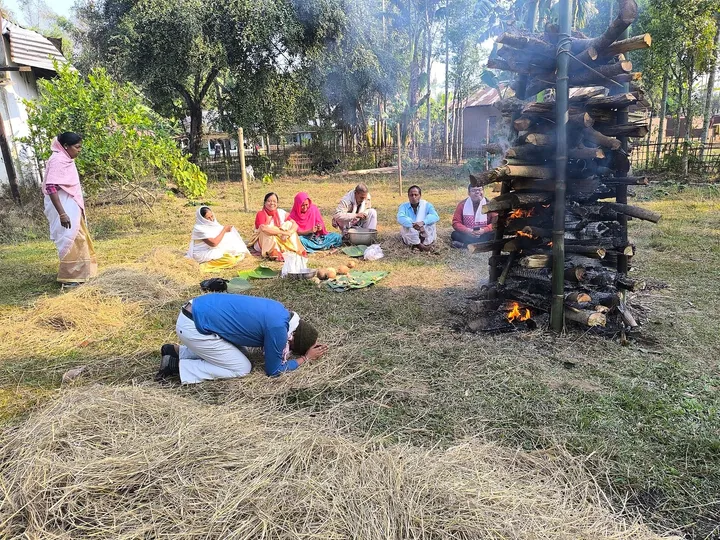

Ali-Aye-Ligang
The Mising spring festival starts on the first Wednesday of Ginmur Polo and lasts five days. It marks the start of ahu paddy sowing. The name joins ali (root/legume), a:ye (seed) and ligang (sowing). It is celebrated with gumrag dance and a community feast.
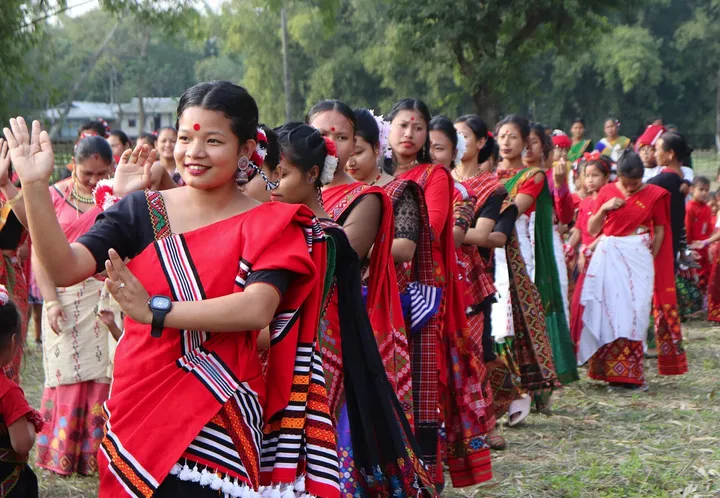

Rongali Bihu (Bohag Bihu)
The Assamese New Year and the arrival of spring. Goru Bihu honours cattle. On Manuh Bihu people wear new clothes and give gamosas to elders, and groups go house to house singing husori.
In Biswanath: a mela is held at Biswanath Ghat on the third day of Bohag Bihu.
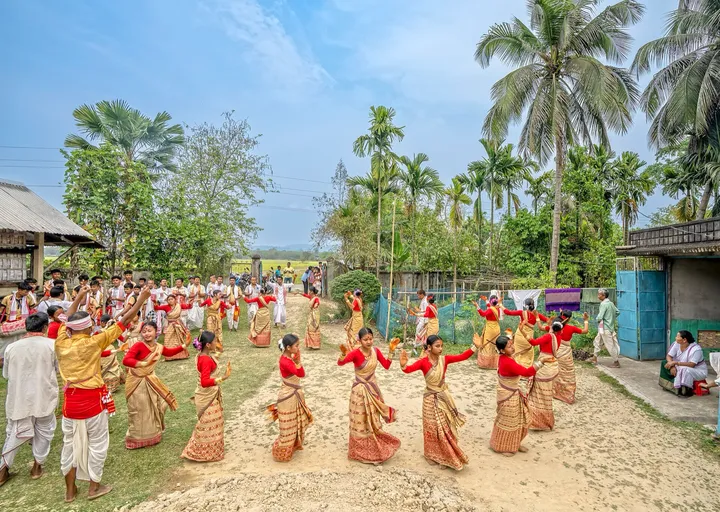

Bwisagu
The Bodo New Year falls at the same time as Bohag Bihu. Bathou is worshipped on the second day, and the festival is full of siphung (flute), kham (drum) and dance.

Karam Puja
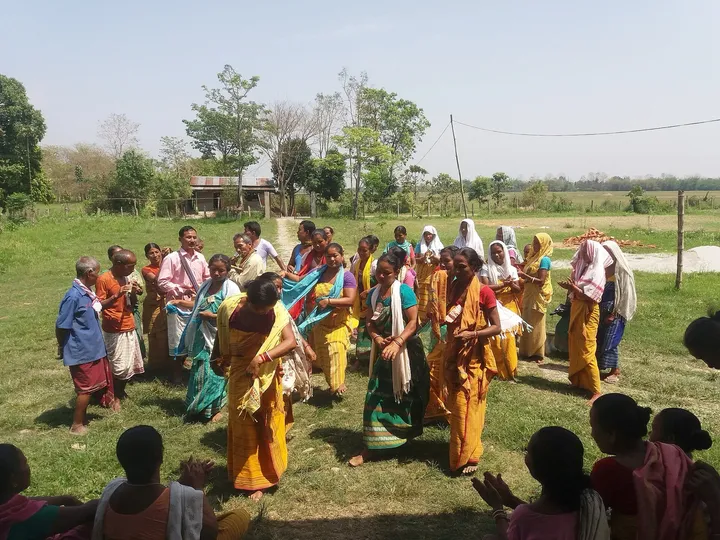
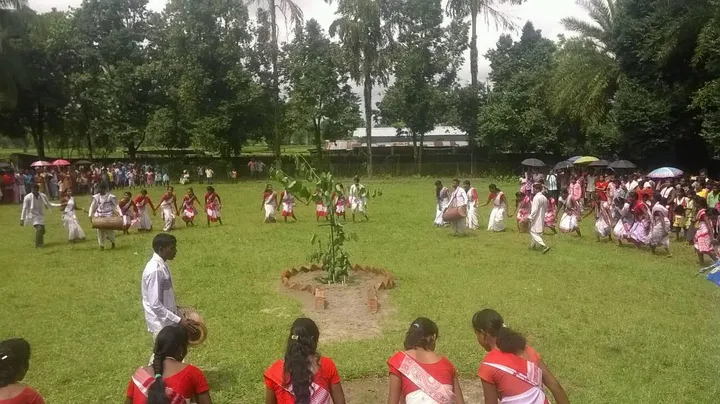
Karam is held on the eleventh day of the bright fortnight of Bhadra and honours Karam Devta. A branch of the Karam tree is planted, and people sing and dance through the night, often to jhumair. It is one of the most important festivals of Assam’s tea-garden community, along with Tusu, Jitia and Sohrai.

Durga Puja
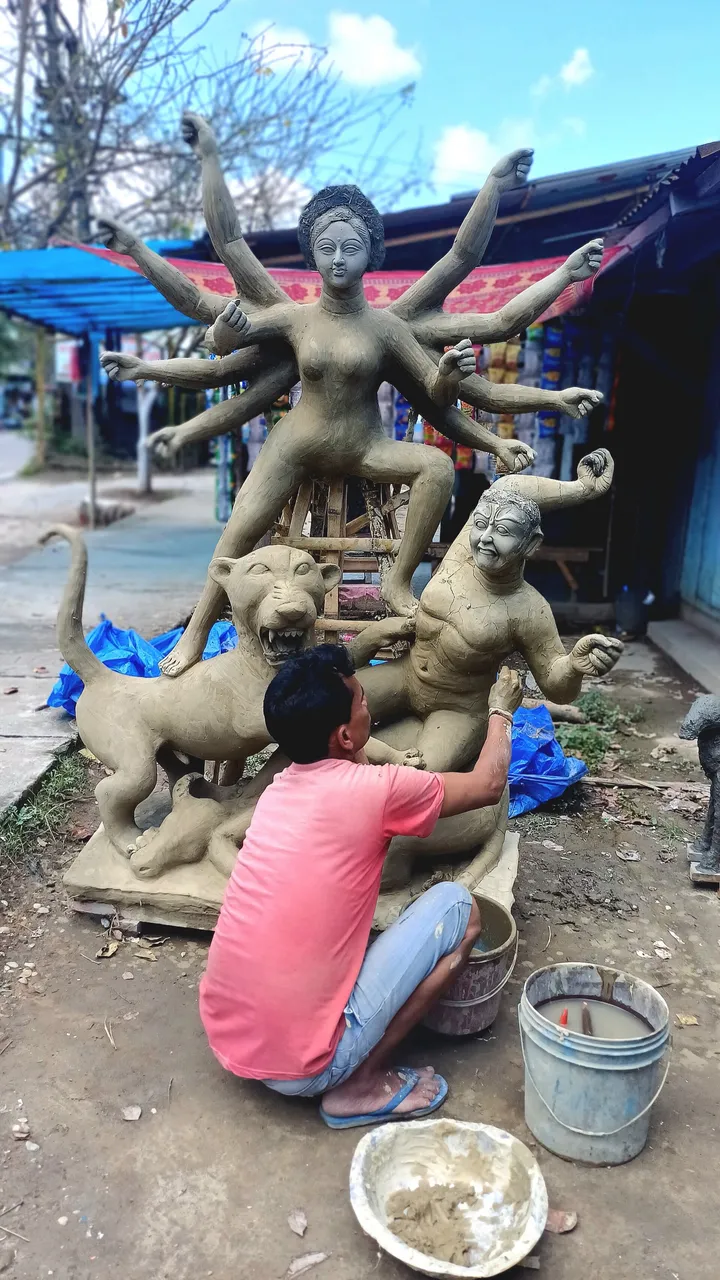
Durga Puja is celebrated across Assam, including in tea gardens such as Monabarie.

Kati Bihu (Kongali Bihu)
The quiet Bihu. Granaries are nearly empty and the paddy is still growing, so families light earthen lamps in the fields, at the tulsi plant and in the granary, and pray for a good harvest.
Eid al-Fitr & Eid al-Adha
The district’s Muslim community celebrates Eid al-Fitr at the end of Ramadan and Eid al-Adha during the Hajj season, with congregational prayers, visits to family and shared meals.
Christmas
Christians, about 7% of the district’s population (Census 2011), celebrate Christmas, as well as Good Friday and Easter, with church services, carols and gatherings.