About Biswanath
Key facts about Biswanath Chariali town and Biswanath district, and the people who live here.
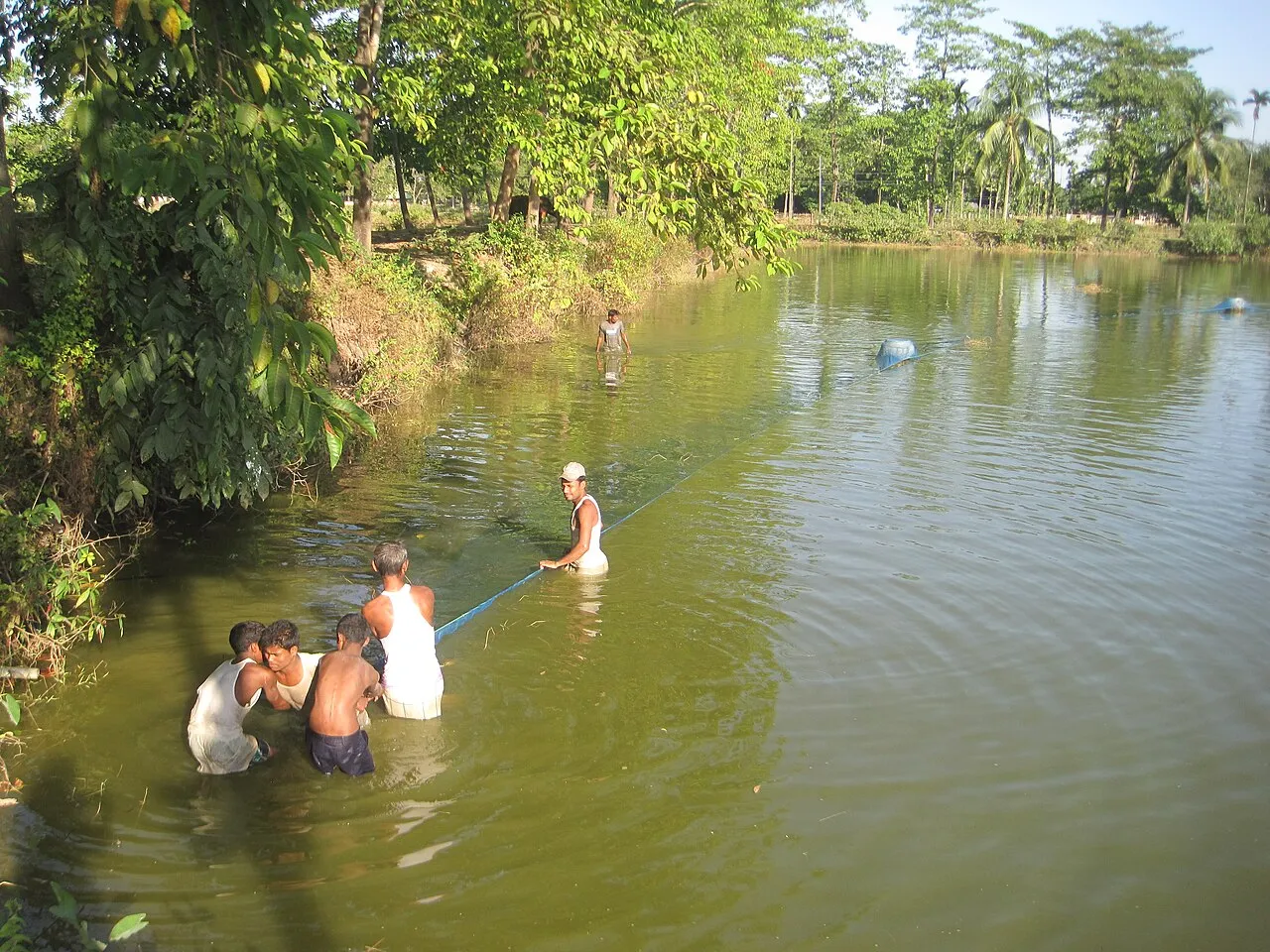
Biswanath Chariali is a town on the north bank of the Brahmaputra in Assam and the headquarters of Biswanath district. It takes its name from the ancient Biswanath temple at Biswanath Ghat, about 10 km to the south. The town sits at the junction of NH-15 and Pabhoi Road.
Biswanath Chariali: key facts
| Population (Census 2011) | 19,145 |
| Town area | 6.02 km² |
| PIN code | 784176 |
| Local body | Biswanath Chariali Municipal Board |
| Vehicle registration | AS-32 |
| Railway station | Viswanath Charali (VNE) |
| Languages (town, 2011) | Assamese 49.6%, Bengali 27.0%, Hindi 17.9%, others 5.5% |
Open Biswanath Chariali in Google Maps
Biswanath district
The district was carved out of Sonitpur: announced on 15 August 2015, it was formally created by a government notification dated 26 February 2016. It was merged back into Sonitpur on 31 December 2022, ahead of the delimitation exercise. The state cabinet decided to restore it on 25 August 2023, and it was notified as a separate district again on 7 September 2023.
It has two sub-divisions, Biswanath and Gohpur, and four revenue circles: Biswanath, Naduar (headquarters Sootea), Helem and Gohpur. Arunachal Pradesh lies to the north, the Brahmaputra to the south, Lakhimpur district to the east and Sonitpur to the west. The main rivers in the Biswanath sub-division are the Brahmaputra, Ghiladhari, Burhigang, Borgang and Behali.
Official figures don’t always agree, probably because they use different boundaries. The district’s geography profile gives an area of about 1,415 km², while the district administration elsewhere gives 2,003 km². The 2011 census population of the three original revenue circles (Biswanath, Helem and Gohpur) was 612,491; the district portal gives 719,933. We show both until we can confirm which boundary each refers to.
People and languages
Biswanath is linguistically diverse: no single mother tongue is spoken by a majority. By mother tongue (Census 2011), its people speak:
| Language | Share | Language | Share |
|---|---|---|---|
| Assamese | 34.1% | Odia | 6.8% |
| Sadri | 13.6% | Mundari | 3.4% |
| Bengali | 8.6% | Karbi | 2.6% |
| Nepali | 7.9% | Hindi | 1.8% |
| Boro | 7.2% | Others | 7.0% |
| Mising | 7.1% |
Many Sadri, Odia and Mundari speakers belong to the tea-garden community. Their ancestors were brought from Chota Nagpur, the Santal Parganas, Odisha and central India to work Assam’s tea gardens, mainly from the 1860s onward.
By religion, the district is about 84% Hindu, 8.5% Muslim and 6.9% Christian. See Culture & festivals for the celebrations that fill the year.